Product evaluation — Humanoid Robotics
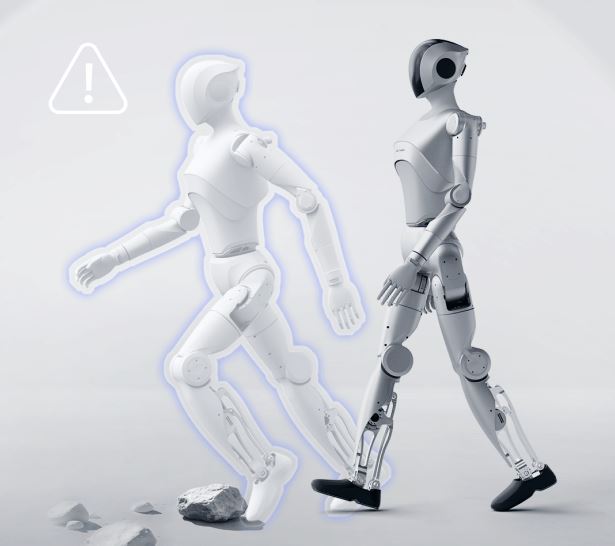
LimX Dynamics Luna Humanoid Robot
Reviewed by Product Call · June 2026 · Based on publicly available manufacturer specifications, verified launch materials, and independent research
🕐 Timing notice: LimX Dynamics officially launched Luna on May 25, 2026 — less than one month before this review was published. Product Call is among the first independent review platforms outside China to evaluate Luna in detail. No independent real-world deployment data has yet been published. All specifications are sourced from LimX Dynamics’ official product pages and verified third-party reporting.
⚠ Transparency notice: Product Call contacted LimX Dynamics seeking comment on this evaluation. No response was received prior to publication. This review is based entirely on publicly available information. Product Call publishes all manufacturer responses in full when received — LimX Dynamics did not participate in this evaluation.
Overview
LimX Dynamics is a Shenzhen-based robotics company founded in January 2022 by Dr. Wei Zhang, formerly of autonomous vehicle company WeRide. In just four years it has raised over $296 million, with strategic investments from Alibaba (May 2024), JD.com (July 2025), and a $200 million Series B in February 2026 backed by Abu Dhabi’s Stone Venture and Oriental Fortune Capital. Luna is LimX’s most commercially ambitious product to date — a full-size interactive humanoid robot priced at RMB 298,000 (approximately $41,000 USD) and designed explicitly for entertainment, hospitality, and commercial environments.
Luna is not a household task robot, a factory worker, or a research platform in the traditional sense. It is something quite different — a performance robot designed to captivate, interact with, and entertain people in high-traffic public venues. At a time when most humanoid robot companies are racing to prove factory utility, LimX has made a deliberate strategic bet on the entertainment and experiential commerce market — a segment projected to grow from $310 million in 2024 to $7.83 billion by 2034. Whether that bet pays off, and whether Luna delivers on its considerable promises, is what this review sets out to examine.
Pricing & availability
Luna Standard
$41,000 USD
RMB 298,000 · pre-order open via LimX distributors · delivery timeline not confirmed
Luna Pro (implied)
TBC
Enhanced configurations hinted at · pricing not yet announced · five-finger hand option available
All prices in USD (approximate conversion from RMB). Pre-orders are available via LimX Dynamics distributors as of 2026. No confirmed delivery timeline or shipment date has been announced. No Australian distributor or pricing has been confirmed. International availability is unclear — prospective buyers outside China should contact LimX directly to confirm purchase pathways and delivery timelines before committing.
Technical specifications
| Specification | LimX Luna |
|---|---|
| Height | 160 cm (5’2″) |
| Weight (with battery) | 54 kg (119 lbs) |
| Degrees of freedom | 27 active DOF (legs, arms, waist, neck) |
| Walking speed | Up to 5 km/h |
| Arm payload | Up to 3 kg (posture-dependent) |
| Battery life | ~4 hours (hot-swap batteries supported) |
| Motion engine | Sys 0 second-generation · stronger joint motors · 30% cooler joints |
| AI motion system | VideoGenMotion (VGM) — learns movements directly from video input |
| Operating system | COSA Operating System (Agentic OS) |
| Task management | Zero-code AI Task Editor via natural language description |
| Interaction modes | Voice, vision, facial expressions, body language simultaneously |
| Swarm control | Synchronise 200+ Luna units with millisecond precision |
| Hand options | Standard palm, fist, or five-finger hand (additional DOF) |
| Exterior | Premium textile finish · fabric-clad design · non-industrial aesthetic |
| Safety | Four-layer safety architecture · fall mitigation · multi-level protection |
| Thermal management | Joint surface temperature reduced 30% vs. previous generation |
| Battery improvement | 150% increase in endurance vs. previous generation (manufacturer claimed) |
| Languages | Not publicly disclosed |
| Target environments | Shopping malls, theme parks, museums, car dealerships, conferences, live events |
What Luna actually does
Luna’s capabilities are best understood through the lens of its intended environment — not a home or factory, but a shopping mall, museum, or theme park. In those contexts, Luna is designed to do three things exceptionally well: move beautifully, interact naturally, and perform compellingly.
VideoGenMotion (VGM) is Luna’s most technically interesting feature. Rather than requiring specialist programmers to choreograph movements joint by joint, VGM allows Luna to learn new movements directly from watching a video of a human performing the action. An operator shows Luna a video of a dance or gesture sequence, and Luna’s AI translates the human motion into its own kinematic limits and reproduces it. This dramatically lowers the barrier to teaching Luna new skills — a genuine and meaningful innovation.
The AI Task Editor is equally innovative. Operators describe a scene or performance in plain natural language text — “welcome guests at the entrance, gesture toward the new collection on the left, and offer to answer questions” — and the system composes the entire task sequence automatically without any coding. For venue operators without robotics expertise, this is a genuinely practical capability that most competitors do not offer.
What Luna cannot do
Product Call believes it is equally important to be direct about Luna’s limitations, which are significant for consumers evaluating it against other humanoid robots in this review library:
Household tasks: Luna is not designed for and cannot perform domestic tasks such as cooking, cleaning, laundry, or dishwashing. Its arm payload of up to 3 kg is suitable for light object handling in performance contexts but not for meaningful household utility. Consumers comparing Luna to the 1X NEO or Unitree R1 for home use are comparing fundamentally different product categories.
Stairs and rough terrain: Luna is designed for flat indoor surfaces in controlled commercial environments. It is not suited to the variable terrain of a typical home or outdoor environment.
Full autonomy: While the zero-code Task Editor dramatically simplifies operation, Luna still requires operator setup and supervision in commercial deployment. No evidence of fully autonomous unsupervised operation in novel environments has been published.
The entertainment market strategy — a smart bet?
LimX’s decision to target the entertainment market rather than industrial or domestic use is one of the most interesting strategic choices in the humanoid robotics industry right now. While Tesla, Figure, and Agility Robotics compete for factory floor contracts, LimX is targeting shopping malls, theme parks, and live events — a market with genuinely paying customers today, not in 2027 or 2028.
The logic is compelling. A theme park operator can justify a $41,000 Luna as a long-term entertainment CAPEX investment comparable to a staffed event team or a branded attraction. The robot generates content, drives social media attention, and creates memorable visitor experiences. This is a fundamentally different value proposition from a factory robot that needs to prove labour cost displacement.
Critically, entertainment deployments also generate real-world operational data in complex, unpredictable environments — data that will accelerate LimX’s AI training for future general-purpose capability. If LimX can lock in venue contracts in 2026–2027, they build deployment track records and motion datasets that factory-focused competitors will struggle to replicate.
Australian consumers — specific considerations
For Australian individuals considering Luna as a home robot, the answer is straightforward: Luna is not designed for home use and would not be suitable for domestic tasks. For Australian businesses — event companies, tourism operators, shopping centres, museums, or theme parks — Luna is a more interesting proposition, but significant questions remain. No Australian distributor has been announced, no local pricing or warranty support exists, and no confirmed international delivery timeline has been published. Interested Australian commercial operators should contact LimX Dynamics directly at limxdynamics.com to explore availability.
Performance ratings
Positives & negatives
✓ Positives
- Genuinely impressive public performance demos — real crowds, not lab conditions
- VideoGenMotion learns movements from video — industry-first capability
- Zero-code AI Task Editor — no programming expertise required
- Swarm control of 200+ units simultaneously — unique in the market
- Hot-swap batteries support extended commercial operation
- Premium textile exterior — non-threatening, approachable aesthetic
- Second-generation Sys 0 motion engine — smoother, stronger, cooler
- Four-layer safety architecture for public environments
- $296 million raised — serious financial backing including Alibaba and JD.com
- Smart entertainment market strategy — paying customers exist today
- Multiple hand configurations including five-finger dexterous option
✗ Negatives
- Not suitable for home use or household tasks
- Arm payload of only 3 kg — very limited manipulation capability
- Cannot navigate stairs or uneven terrain
- No confirmed international delivery timeline
- No Australian distributor or after-sales support
- 150% battery improvement claim not independently verified
- No independent real-world deployment data published at launch
- Languages supported for voice interaction not disclosed
- No response to Product Call’s media inquiry
- At $41,000 significantly more expensive than Unitree R1 and 1X NEO
- Production volume and delivery capacity not disclosed
- Platform longevity risk — new company in rapidly evolving market
How Luna compares — Product Call’s full review library
| Robot | Price (USD) | Home use? | Entertainment? | Available now? | Australia? |
|---|---|---|---|---|---|
| Unitree R1 | $5,900 | ⚠ Limited | ⚠ Basic | ✓ Yes | ✓ Yes |
| 1X NEO | $20,000 | ✓ Yes | ⚠ Basic | ⚠ US 2026 | ⚠ 2027 |
| Figure 03 | ~$20,000 | ✓ Yes | ✗ No | ✗ No | ✗ No |
| UBTECH U1 | ~$30,000 | ⚠ Companion only | ✓ Yes | ⚠ China only | ✗ No |
| Tesla Optimus | ~$30,000 | ⚠ Future | ✗ No | ✗ No | ✗ No |
| LimX Luna | $41,000 | ✗ No | ✓ Yes — specialist | ⚠ Pre-order | ⚠ Unclear |
⚖ Product Call verdict
LimX Luna is one of the most strategically interesting humanoid robots Product Call has evaluated — not because it is the most capable overall, but because it is the most clearly positioned for a real market that exists today. While competitors scramble to prove factory utility or make home robot promises they cannot yet keep, LimX is targeting shopping malls, theme parks, and live events — environments where a beautiful, graceful, crowd-pleasing robot has immediate commercial value. The VideoGenMotion system and zero-code Task Editor are genuine innovations that lower the barrier to deployment significantly. However, for Australian consumers seeking a home robot, Luna is simply not the right product — it cannot perform household tasks, it is not designed for home environments, and no Australian availability pathway has been confirmed. For Australian businesses in the entertainment, tourism, or hospitality sectors, Luna is worth watching closely — but with the caveat that delivery timelines, international pricing, and local support remain unconfirmed. At $41,000 it is the most expensive robot in Product Call’s review library, and that price demands verified real-world performance data that has not yet been independently published.
ⓘ This evaluation is based on LimX Dynamics’ official product specifications, verified third-party reporting from TechNode, InterestingEngineering, Humanoid.guide, and AI Weekly, and independent research conducted by Product Call in June 2026. LimX Dynamics did not respond to Product Call’s media inquiry. Product Call has no commercial relationship with LimX Dynamics or any associated entity. All prices are approximate USD conversions from RMB and should be verified with LimX Dynamics directly before purchase.
Comments are closed