Product evaluation — Humanoid Robotics
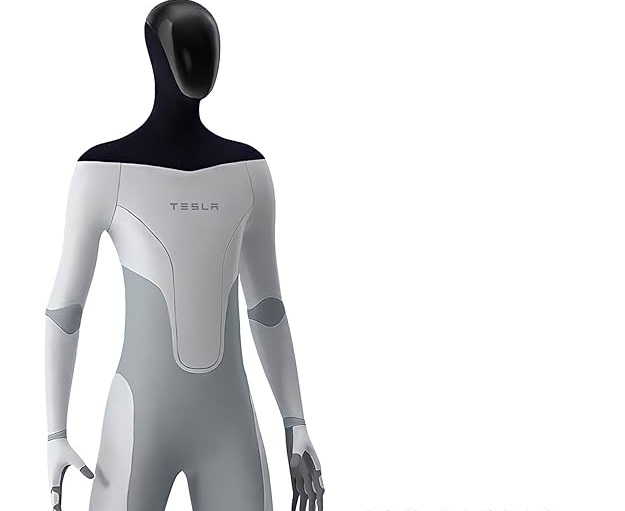
Tesla Optimus Gen 2 Humanoid Robot
Reviewed by Product Call · June 2026 · Based on publicly available manufacturer information, verified factory deployment data, and independent research
⚠ Transparency notice: Product Call attempted to contact Tesla’s media relations team via their official press contact form at tesla.com/en_AU/contact for comment on this evaluation. Tesla does not publish a direct press email address for individual media inquiries. No response was received. This evaluation is therefore based entirely on publicly available information including Tesla’s official presentations, AI Day events, verified factory deployment data, and independent industry research. Product Call publishes all manufacturer responses in full when received — Tesla did not participate in this evaluation.
Overview
Tesla Optimus is arguably the most talked-about humanoid robot on the planet — not because it is the most capable or the most available, but because of who is building it and what it promises to become. Announced at Tesla’s AI Day in August 2021 and now in its second generation, Optimus Gen 2 represents the most ambitious attempt by any automotive company to enter the humanoid robotics market — and if Tesla’s price targets are achieved, it could be the product that finally brings humanoid robots to mainstream consumers worldwide.
As of June 2026, however, Optimus Gen 2 is not available for purchase by anyone. It is deployed exclusively inside Tesla’s own Fremont and Austin factories, performing battery cell sorting, parts handling, and quality inspection tasks. The gap between what Optimus promises and what it can currently deliver is the central story of this review — and it is a gap that every prospective buyer must understand before getting swept up in the considerable marketing momentum surrounding the Tesla brand.
A rapid evolution — the Optimus timeline
Pricing timeline
Now (2026)
Not for sale
Factory use only · no pre-orders · no waitlist · no external sales
Late 2026 target
~$30,000 USD
Limited commercial sales to select enterprise customers only · not consumer
2027 target
~$25,000 USD
Broader commercial availability · Robot-as-a-Service models possible
Long-term goal
<$20,000 USD
Consumer price target at mass production scale · no confirmed timeline
All prices in USD. None of these prices are confirmed — they are Elon Musk’s stated targets. Tesla has a well-documented history of missing its own timelines by 1–3 years. No Australian pricing, no Australian distributor, and no Australian pre-order pathway exists. Be wary of any third-party website claiming to offer Optimus pre-orders — Tesla has not authorised any.
Technical specifications
| Specification | Optimus Gen 2 |
|---|---|
| Height | 173 cm (5’8″) |
| Weight | 57 kg (125 lbs) — 16 kg lighter than Gen 1 |
| Degrees of freedom (body) | 28+ DOF |
| Degrees of freedom (hands) | 22 DOF — Gen 3 hands (50 total actuators) |
| Walking speed | 8 km/h (5 mph) — 30% faster than Gen 1 |
| Carry capacity | 20 kg (44 lbs) |
| Deadlift capacity | 68 kg (150 lbs) |
| Battery | 2.3 kWh — designed for 8+ hours factory operation |
| Battery life (disclosed) | Not officially confirmed for consumer use |
| AI system | Adaptation of Tesla Full Self-Driving (FSD) neural network |
| AI training | Tesla Dojo supercomputer — end-to-end neural network learning |
| Sensors | Cameras, depth sensors, force/torque sensors in hands, IMU |
| Hand tactile sensing | Force-sensitive manipulation via IMU and force/torque sensors |
| Languages | Not publicly disclosed |
| Voice conversation | Demonstrated but not officially confirmed for consumer release |
| Autonomy level | Semi-autonomous — supervised operation in defined environments |
| Current deployment | Tesla Fremont and Austin factories only |
| Availability | Not for sale as of June 2026 |
Tesla’s genuine competitive advantages
Product Call believes in giving credit where it is due. Despite the hype and the timeline concerns, Tesla brings genuine structural advantages to humanoid robotics that no competitor can match:
The teleoperation concern
One of the most significant findings in Product Call’s research is that multiple Tesla Optimus demonstrations have been revealed to use teleoperation — meaning a human operator was remotely controlling the robot — rather than demonstrating genuine autonomous capability. This is not unique to Tesla; Figure AI’s early demos faced similar scrutiny. But for a product backed by the world’s most famous technology entrepreneur, the gap between demo and reality deserves direct examination.
The Elon Musk timeline problem
A pattern worth noting
Elon Musk stated at Davos in January 2026 that Tesla plans to make Optimus available for public purchase by end of 2027. Independent analysts, noting Tesla’s consistent history of missing its own timelines by 1–3 years, estimate widespread consumer availability is more realistically 2028–2029.
For context: Tesla’s original Cybertruck was promised for 2021 and delivered in late 2023. Full Self-Driving was promised as complete “next year” repeatedly from 2016 onwards. The Semi was promised for 2019 and reached limited production in 2022. Optimus was announced in 2021 with Musk saying it would be available “within a few years.” It is now 2026 and it remains unavailable for purchase.
This is not a reason to dismiss Optimus — the progress from 2021 to 2026 has been genuinely remarkable. It is, however, a reason for consumers to apply appropriate scepticism to any stated availability date.
Australian consumers — specific considerations
For Australian readers, the situation is straightforward: there is currently no pathway to purchase a Tesla Optimus in Australia, no announced Australian pricing, no local distributor, and no service or warranty infrastructure. Musk’s Davos statement targets consumer availability by end of 2027 globally — with independent analysts suggesting 2028–2029 as more realistic. Even at the optimistic end of that timeline, Australian consumers are looking at a minimum two-year wait from today. In the meantime, products like the Unitree R1 are available now and can be shipped to Australia today.
Performance ratings
Positives & negatives
✓ Positives
- FSD neural network gives Optimus world-class AI visual understanding
- Dojo supercomputer training — unmatched AI infrastructure
- 22 DOF Gen 3 hands with force-sensitive tactile sensing
- Lightest in class at 57 kg — significantly lighter than Figure 03 (70 kg) and Atlas (90 kg)
- 8+ hour battery life for factory use — best in class for endurance
- 8 km/h walking speed — faster than most competitors
- Vertical integration gives unmatched cost reduction potential
- $20B CapEx committed — serious long-term investment signal
- Fremont factory conversion targets 1 million units per year
- Long-term price target of under $20,000 — most affordable at scale
- Real factory deployment — not just a lab demo
✗ Negatives
- Not available for purchase as of June 2026
- No pre-orders, no waitlist, no consumer pathway
- Multiple demos revealed to use teleoperation not autonomy
- Battery life for consumer use never officially disclosed
- Languages supported not publicly disclosed
- Musk’s timelines consistently miss by 1–3 years
- Consumer availability realistically 2028–2029 per independent analysts
- No Australian pricing, distributor, or service infrastructure
- No independent third-party validation of autonomous capabilities
- Tesla did not respond to Product Call’s media inquiry
- Political controversy surrounding Elon Musk poses brand risk
- No confirmed languages for voice interaction or home AI use
Comparison with alternatives reviewed by Product Call
| Robot | Price | Available now? | Home AI? | Australia? |
|---|---|---|---|---|
| Unitree R1 | $5,900 USD | ✓ Yes | ✗ Basic only | ✓ Yes |
| 1X NEO | $20,000 USD | ⚠ US 2026 | ✓ Yes | ⚠ 2027 |
| Figure 03 | ~$20,000 USD | ✗ No | ✓ Yes | ✗ No |
| UBTECH U1 | ~$30,000 USD | ⚠ China only | ✓ Companion AI | ✗ No |
| Tesla Optimus | ~$30,000 USD | ✗ No | ⚠ Unconfirmed | ✗ No |
⚖ Product Call verdict
Tesla Optimus Gen 2 has the most compelling long-term potential of any humanoid robot Product Call has evaluated. The combination of FSD-derived AI, Dojo supercomputer training, vertical integration, automotive-scale manufacturing infrastructure, and an aggressive sub-$20,000 price target is a genuinely formidable proposition — one that could do to humanoid robotics what the Model 3 did to electric vehicles. However, potential and reality are two very different things, and in June 2026 the reality is stark: you cannot buy an Optimus, Tesla has not confirmed when you can, multiple demonstrations have relied on teleoperation, battery life for consumer use has never been disclosed, and Elon Musk’s track record on delivery timelines gives informed observers legitimate reason for caution. For Australian consumers specifically, Optimus is at minimum two to three years away under any realistic scenario. Watch Tesla Optimus very carefully — it may well be the most important consumer product of the next decade. But do not wait for it at the expense of your actual needs today.
ⓘ This evaluation is based entirely on publicly available information including Tesla’s official AI Day presentations, verified factory deployment data, Elon Musk’s public statements, and independent industry research conducted by Product Call in June 2026. Product Call contacted Tesla’s media relations team via their official press contact form and received no response. Tesla did not participate in this evaluation. Product Call has no commercial relationship with Tesla, Inc. or any of its subsidiaries.
Comments are closed