Product evaluation — Humanoid Robotics
UBTECH UWORLD U1 Humanoid Robot Series
Reviewed by Product Call · June 2026 · Based on publicly available manufacturer information, independent research, and pre-launch presale materials
⚠ Timing notice: This is one of the most timely product evaluations Product Call has published. UBTECH opened presales for the U1 series on JD.com on 2 June 2026 — just days before this review was written. The official launch event is scheduled for 30 June 2026. Full specifications, confirmed pricing, and complete technical details have not yet been publicly released by UBTECH. This review is based on all available presale materials, manufacturer teasers, and verified third-party reporting. Product Call will update this evaluation following the official June 30 launch.
Overview
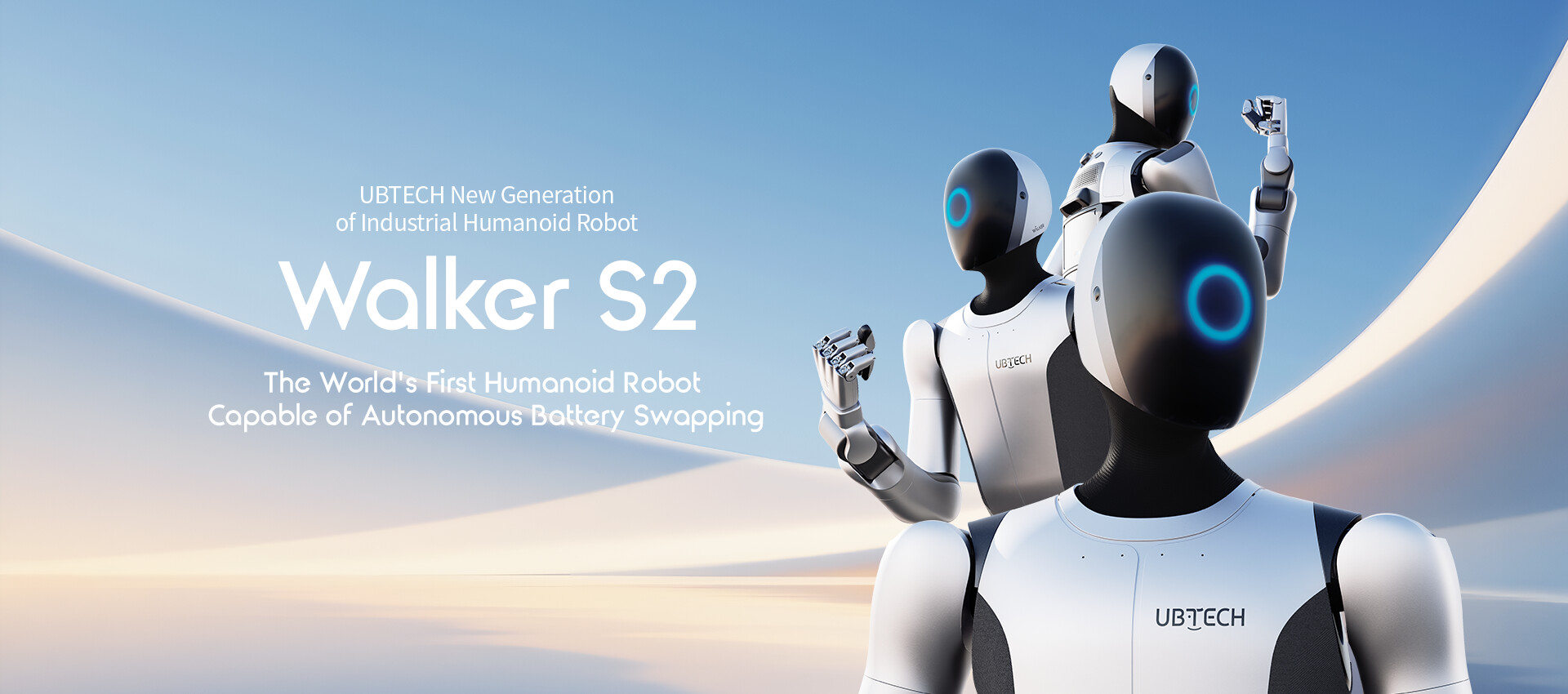
UBTECH Robotics is one of China’s most established humanoid robotics companies, founded in 2012 in Shenzhen and listed on the Hong Kong Stock Exchange. Unlike many humanoid robotics startups that exist primarily in demo mode, UBTECH has real industrial credentials — its Walker S2 robots are deployed at Airbus, Texas Instruments, NIO, and FAW-Volkswagen factories, and the company has a Siemens partnership targeting 10,000 industrial units annually. In February 2026, UBTECH open-sourced its own vision-language model called Thinker, further cementing its technical credibility.
The UWORLD U1 represents a dramatic departure from that industrial focus. Launched under a new consumer sub-brand called UWORLD, the U1 series positions UBTECH in the home companion robot market for the first time — and it has done so with one of the most striking design choices in the humanoid robot industry: hyper-realistic silicone skin, realistic hair, and expressive camera-tracking eyes, available in both male and female variants. It is, in blunt terms, the first humanoid robot that is designed to look convincingly human.
That design choice is both the U1’s most compelling selling point and its most controversial aspect — raising genuine questions about the uncanny valley effect, emotional attachment, data privacy, and regulatory scrutiny that no other humanoid robot in this review library has had to confront.
Pricing & availability
U1 Female
~$30,000 USD
168 cm · 35.2 kg · CNY 3,000 deposit · China only · delivery by Sept 15, 2026
U1 Male
~$30,000 USD
183 cm · 42 kg · CNY 3,000 deposit · China only · delivery by Sept 15, 2026
U1 Pro
TBC
Enhanced memory-emotional AI · customisable appearance · enhanced human-robot interaction · pricing not yet announced
All prices in USD (approximate conversion from CNY). Final confirmed pricing will be announced at the official June 30 launch event. Presale deposits of CNY 3,000 (~$450 USD) are required via JD.com, which is a China-domestic platform. There is currently no pathway for Australian or Western consumers to purchase the U1. USD pricing is widely reported as approximately $30,000 but has not been officially confirmed by UBTECH.
Technical specifications
| Specification | U1 Female | U1 Male |
|---|---|---|
| Height | 168 cm (5’6″) | 183 cm (6’0″) |
| Weight | 35.2 kg | 42 kg |
| Degrees of freedom | 88 DOF (both variants) | |
| Exterior | Hyper-realistic silicone skin, realistic hair, expressive eyes | |
| Eye tracking | Camera-tracking eyes that follow people | |
| AI system | Emotional growth-based large model (proprietary, undisclosed) | |
| Memory | Local encrypted memory storage | |
| Customisation | Appearance customisable · no secondary development supported | |
| Connectivity | Wi-Fi | |
| Battery life | 2–4 hours per charge | |
| Mobility | Walks and sits on flat indoor surfaces only · not designed for stairs or rough terrain | |
| Household tasks | Not designed for household chores — focus is emotional companionship | |
| Languages | Not publicly disclosed | |
| Availability | China only · no Western release timeline confirmed | |
| Demand | 2,100+ presales in first 6 days | |
What the U1 actually does — and what it does not
This is perhaps the most critical distinction in this entire review, and one that UBTECH’s marketing materials are not entirely clear about. The U1 is not a household task robot. It cannot fold laundry, load a dishwasher, or fetch items from across the house. It is designed explicitly for emotional companionship — conversation, emotional recognition, personalised interaction, and social presence.
The U1’s AI is described as an “emotional growth-based large model” with locally encrypted memory — meaning it learns and remembers interactions with its owner over time, building what UBTECH describes as a personalised emotional relationship. The camera-tracking eyes are designed to maintain eye contact during conversation, and the hyper-realistic appearance is intended to make interaction feel more natural and emotionally meaningful.
Whether this constitutes genuine emotional intelligence or sophisticated pattern-matching is a philosophical and technical question UBTECH has not publicly addressed. What is clear is that the U1 represents a genuinely new product category — one that sits somewhere between a social robot, a companion device, and a very expensive conversational AI in humanoid form.
The hyper-realistic design — opportunity and concern
The U1’s hyper-realistic silicone skin and realistic hair make it the most visually human-like robot ever offered for consumer purchase. This is both its greatest differentiator and its most significant source of concern.
Beyond the aesthetic question, the hyper-realistic design raises deeper concerns that Product Call believes consumers must seriously consider before purchase:
Emotional attachment risk: A robot designed to build a personalised emotional relationship, remember its owner’s history, and present itself in human form creates a new category of human-technology dependency that has no established precedent at consumer scale. The long-term psychological implications of deep emotional attachment to a humanoid AI companion are not yet understood.
Data privacy: The U1 stores memory data locally with encryption — which is a positive step. However, UBTECH has not publicly addressed what data is transmitted to its servers, what data is retained if a unit is returned or resold, and what happens to the emotional memory profile of an owner if UBTECH’s consumer division changes direction. The FTC in the United States has flagged exactly these concerns about social robots with local memory, and Australian consumer data law raises similar questions.
The regulatory question
The U1 currently has no confirmed path to the US, UK, or Australian market. This is not simply a distribution question — it is a regulatory one. The FTC has been tightening scrutiny of social robotics and data practices since 2025, and an emotionally responsive robot with local memory designed to live alongside people sits in genuinely uncharted territory for US and UK consumer safety frameworks. Australia’s own consumer data protections under the Privacy Act 1988 would raise similar questions for any emotionally responsive AI device that builds personalised memory profiles of its owners.
UBTECH has not publicly addressed how the U1 would navigate these regulatory environments. Until it does, Western consumers have no clear pathway to purchase even if they wished to.
Market demand — a remarkable signal
Performance ratings
Positives & negatives
✓ Positives
- Most visually realistic humanoid robot ever offered for consumer purchase
- 88 degrees of freedom — exceptional range of natural movement
- Genuine industrial pedigree — Walker S2 deployed at Airbus and Texas Instruments
- Locally encrypted memory — better than cloud-only alternatives
- Emotional AI concept is genuinely novel and potentially meaningful
- Available in male and female variants — unique in the market
- U1 Pro offers enhanced AI and customisable appearance
- Siemens partnership signals serious manufacturing scale capability
- 2,100+ presales in 6 days — extraordinary consumer demand signal
- Open-sourced Thinker vision-language model — technical credibility
✗ Negatives
- Cannot perform household tasks — companionship only
- Not available outside China — no Western release timeline
- Significant regulatory hurdles for US, UK, and Australian markets
- Battery life of only 2–4 hours — below 1X NEO and Figure 03
- Cannot navigate stairs or rough terrain
- No secondary development or customisation of AI supported
- Languages supported not publicly disclosed
- Full specs not yet published — official launch still pending
- Emotional attachment risk not addressed by manufacturer
- Long-term data privacy implications inadequately disclosed
- Uncanny valley effect risk unaddressed and untested publicly
- $30,000 price for a companion-only robot is very difficult to justify
Comparison with alternatives
The UBTECH U1 occupies a unique and somewhat isolated position in the humanoid robot market. At approximately $30,000 it is the most expensive consumer humanoid Product Call has reviewed, yet it is also the least capable in terms of practical household utility. The Unitree R1 at $5,900 is more physically capable and the 1X NEO at $20,000 can perform real household tasks. Neither can match the U1’s hyper-realistic appearance or emotional AI focus — but most consumers will reasonably ask whether emotional companionship alone justifies a $30,000 price tag. Against competitors, the U1 also has the least availability for non-Chinese consumers, the least transparent specifications, and the most significant unanswered questions around data privacy and regulatory compliance.
⚖ Product Call verdict
The UBTECH UWORLD U1 is arguably the most visually striking humanoid robot ever announced for consumer purchase — and one of the most conceptually interesting. The decision to build a hyper-realistic emotional companion rather than a household task robot represents a genuine philosophical position about what humanoid robots should be. Whether that position is right is a question consumers will answer over the coming years. However, for Australian consumers reading this review, the verdict is straightforward: the U1 is not available to you, has no confirmed Western release timeline, faces serious regulatory questions in English-speaking markets, cannot perform household tasks, costs $30,000, and has a battery life of only 2–4 hours. The emotional attachment and data privacy implications it introduces are also genuinely novel concerns that no regulatory framework has yet fully addressed. Product Call will revisit this evaluation after the official June 30 launch event, when full specifications and confirmed pricing will finally be disclosed. Until then, watch with interest — but do not place a deposit.
ⓘ This evaluation is based on publicly available presale materials, manufacturer teasers, verified third-party reporting, and independent research conducted by Product Call in June 2026. Full UBTECH U1 specifications have not yet been officially published as of the date of this review — the official launch event is scheduled for 30 June 2026. Product Call will update this evaluation with confirmed specifications and pricing following that event. Product Call has no commercial relationship with UBTECH Robotics, UWORLD, or any associated entity.
Comments are closed