Product evaluation — Humanoid Robotics
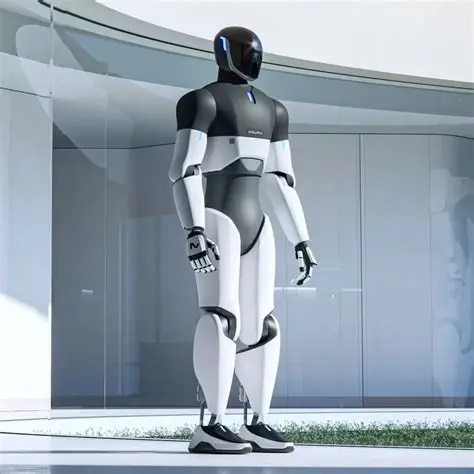
NEURA Robotics 4NE1 & 4NE1 Mini
Reviewed by Product Call · June 2026 · Based on publicly available manufacturer specifications, CES 2026 materials, and independent research
⚠ Transparency notice: Product Call attempted to contact NEURA Robotics directly for comment on this evaluation. NEURA Robotics does not publish a dedicated press or media email address on their official website. No response was received to our contact attempts. This evaluation is therefore based entirely on publicly available manufacturer specifications, verified CES 2026 and Automatica 2025 materials, and independent third-party research. Product Call publishes all manufacturer responses in full when received — NEURA Robotics did not participate in this evaluation.
Overview
NEURA Robotics is Europe’s most significant humanoid robotics company — and one of the most technically credible in the world. Founded in 2019 in Metzingen, Germany by David Reger, NEURA has built a remarkable track record: winner of the German Founders Award, named Innovator of the Year, and backed by a staggering €1.2 billion funding round in March 2026 at a €4 billion valuation, largely backed by Tether Holdings. With over 1,200 employees and partnerships with Bosch, NVIDIA, Porsche Design, and Siemens, NEURA is not a startup chasing headlines — it is a serious European engineering company with the backing and partnerships to match its ambitions.
The 4NE1 is NEURA’s flagship humanoid platform, now in its third generation (Gen 3.5), and it brings several genuine firsts to the market: it is the first humanoid robot co-designed with Studio F.A. Porsche — the designers behind the iconic Porsche 911 — and it features a patented artificial skin system that detects human proximity before contact, enabling a level of human safety collaboration that most competitors cannot match. Most significantly for Western consumers, NEURA is Europe’s leading cognitive humanoid, competing directly with Chinese imports and offering transparent public pricing — a rarity in an industry that hides behind “contact sales.”
The product family — three distinct robots
NEURA offers three distinct products under the 4NE1 platform, each targeting a different market and price point. Understanding which product is relevant to you is essential before evaluating specifications.
4NE1 Mini Standard
€19,999
~$22,000 USD · 132 cm · 36 kg · education & research · shipping 2026 · Python SDK · ROS 2
4NE1 Mini Pro
€24,999+
~$27,000 USD · adds 12 DOF dexterous hands · C++ SDK · teleoperation · digital twin · Neura Gym training
4NE1 Gen 3.5
€60,000–€98,000
~$65,000–$107,000 USD · full-size industrial · 100 kg lift · fleet pricing at €60K · ships late 2026
MiPA Home Robot
€9,999
~$11,000 USD · wheeled home assistant · cleaning · health monitoring · daily routine support · not bipedal
All prices in EUR with approximate USD conversion. Pre-orders open via neura-robotics.com with a fully refundable €100 deposit. Individual consumer pre-orders are available for the Mini. The Gen 3.5 is intended for industrial and commercial fleet customers. No Australian distributor or confirmed Australian pricing has been announced. International availability is expected with distribution partnerships in key markets to be confirmed.
Technical specifications
| Specification | 4NE1 Mini | 4NE1 Gen 3.5 |
|---|---|---|
| Height | 132 cm (4’4″) | 170–180 cm (5’7″–5’11”) |
| Weight | 36 kg (79 lbs) | 60–80 kg (132–176 lbs) |
| Degrees of freedom (body) | 25 DOF | 25–45 DOF |
| Degrees of freedom (hands) | Standard: none · Pro: 12 DOF per hand | 12 DOF per hand |
| Maximum lift capacity | 3 kg | 100 kg (220 lbs) — highest in class |
| Continuous payload | 3 kg | 15–20 kg |
| Maximum walking speed | 3 km/h (0.83 m/s) | 5 km/h |
| Battery life | 5 hours | 5 hours · SwapBatt for continuous operation |
| AI system | AURA AI · NVIDIA Isaac GR00T | AURA AI · NVIDIA Thor T5000 · Isaac GR00T |
| Fleet learning | Neuraverse (shared skill network) | Neuraverse (shared skill network) |
| Vision | 3D cameras · object & gesture recognition | 7 cameras · omnidirectional 3D vision |
| Safety sensing | NEURA Omnisensor (touchless detection) | NEURA Omnisensor · full artificial skin |
| Force-torque sensing | 0.1N sensitivity | 0.1N sensitivity · all joints |
| Developer interfaces (Standard) | Python SDK · ROS 2 | Enterprise SDK |
| Developer interfaces (Pro) | C++ SDK · digital twin · teleoperation · Neura Gym | Full enterprise stack |
| Stair navigation | Under development | Yes |
| Design partner | Studio F.A. Porsche | Studio F.A. Porsche |
| Languages supported | Multi-language AI (not fully disclosed) | Multi-language AI (not fully disclosed) |
| Availability | 2026 · individual pre-orders open | Late 2026 · enterprise/fleet |
What makes NEURA genuinely different
The 4NE1 Mini — the home and education case
For Product Call’s Australian consumer audience, the 4NE1 Mini is the most relevant product in NEURA’s lineup. At €19,999 (~$22,000 USD) for the Standard and €24,999+ for the Pro, it sits between the Unitree R1 ($5,900) and the 1X NEO ($20,000) in price, and it brings a very different value proposition to both.
The Mini is explicitly designed for education, research, and interactive demonstrations — not household chores. Both 4NE1 Mini Standard and Pro are expected to be available in 2026, with reservations intended for individual orders. The Python SDK and ROS 2 interface on the Standard model make it immediately accessible to university researchers, robotics students, and technically capable home users. The Pro’s addition of 12 DOF dexterous hands, C++ SDK, digital twin access, and Neura Gym training makes it a serious research platform.
The MiPA — NEURA’s dedicated home robot
Worth noting separately is NEURA’s MiPA — a wheeled home assistant priced at €9,999 (~$11,000 USD) designed specifically for household use including cleaning, organising, health monitoring, and daily routine support. MiPA is not a bipedal humanoid — it moves on wheels — but it is NEURA’s explicit answer to the home assistance market and may be more practically useful than the bipedal Mini for many consumers. Product Call will evaluate MiPA separately in a future review.
Australian consumers — specific considerations
NEURA Robotics has not announced an Australian distributor or Australian-specific pricing. Pre-orders can be placed via neura-robotics.com with a fully refundable €100 deposit — the most accessible pre-order process of any humanoid robot Product Call has reviewed. However, delivery timelines, shipping costs to Australia, warranty support, and after-sales service all remain unconfirmed for the Australian market. The €100 deposit is refundable, making a reservation essentially risk-free as a way to hold your place in the queue while these details are clarified.
Performance ratings
Positives & negatives
✓ Positives
- Europe’s only humanoid robot available for individual pre-order
- Porsche-designed aesthetics — most refined humanoid appearance in class
- Neuraverse fleet learning — unique collective AI intelligence platform
- 100 kg lift capacity on Gen 3.5 — highest in the entire market
- Patented artificial skin and Omnisensor — safest human-robot collaboration
- 5-hour battery life — among the best in class
- Fully refundable €100 pre-order deposit — lowest risk reservation of any humanoid
- Transparent public pricing — extremely rare in this market
- Python SDK and ROS 2 on Mini Standard — immediately accessible to developers
- NVIDIA Isaac GR00T and Thor T5000 — world-class AI compute
- Bosch and Siemens partnerships — serious industrial credibility
- €1.2B funding — one of the best-funded humanoid companies in Europe
- Multi-language AI confirmed — important for non-English markets
✗ Negatives
- Mini payload of only 3 kg — very limited for household task use
- Stair navigation not available on Mini at launch
- No Australian distributor or confirmed Australian pricing
- Mini walking speed of 3 km/h — slowest in this review library
- Specific languages supported not fully disclosed
- Gen 3.5 price of €60,000–€98,000 far beyond consumer reach
- NEURA Robotics did not respond to Product Call’s media inquiry
- No confirmed household task capability for Mini beyond education/research
- International distribution and support network not yet established
- Mini designed primarily for education and research — not home chores
Comparison with robots reviewed by Product Call
| Robot | Price (USD) | Origin | Home suitable? | Battery | Australia? |
|---|---|---|---|---|---|
| Unitree R1 | $5,900 | China | ⚠ Limited | 1 hour | ✓ Yes |
| 1X NEO | $20,000 | Norway/USA | ✓ Yes | 4 hours | ⚠ 2027 |
| NEURA Mini Std | ~$22,000 | Germany | ⚠ Research/EDU | 5 hours | ⚠ TBC |
| NEURA Mini Pro | ~$27,000 | Germany | ⚠ Research/EDU | 5 hours | ⚠ TBC |
| Figure 03 | ~$20,000 | USA | ✓ Yes | 5 hours | ✗ No |
| UBTECH U1 | ~$30,000 | China | ✓ Companion | 2–4 hours | ✗ No |
| Tesla Optimus | ~$30,000 | USA | ⚠ Future | TBC | ✗ No |
| LimX Luna | $41,000 | China | ✗ Commercial only | 4 hours | ⚠ 2027 B2B |
⚖ Product Call verdict
NEURA Robotics is the most technically impressive humanoid company Product Call has reviewed that is actually making its products available for individual pre-order today. The combination of Porsche-designed aesthetics, Neuraverse collective learning, patented safety sensing, 5-hour battery life, and genuinely transparent public pricing sets a new standard for what a credible Western humanoid robot company should look like. The fully refundable €100 pre-order deposit is the most consumer-friendly reservation process in the entire industry. However, Australian consumers should approach this with eyes open: the 4NE1 Mini is designed for education and research rather than household tasks, its 3 kg payload limits practical home utility, stair navigation is not yet available, and no Australian distributor or service infrastructure exists. For technically minded consumers, robotics researchers, and university departments in Australia, the 4NE1 Mini is the most compelling European humanoid platform available for pre-order in 2026. For consumers simply wanting a household assistant, the 1X NEO remains the stronger fit. NEURA’s Neuraverse platform, however, is worth watching very closely — if collective fleet learning delivers on its promise, it could prove to be the most significant competitive advantage in the entire humanoid robotics market.
ⓘ This evaluation is based entirely on publicly available information including NEURA Robotics’ official website, CES 2026 and Automatica 2025 verified materials, third-party specifications, and independent research conducted by Product Call in June 2026. NEURA Robotics did not respond to Product Call’s contact attempts and did not participate in this evaluation. Product Call has no commercial relationship with NEURA Robotics, Studio F.A. Porsche, NVIDIA, Bosch, or any associated entity.
Comments are closed